
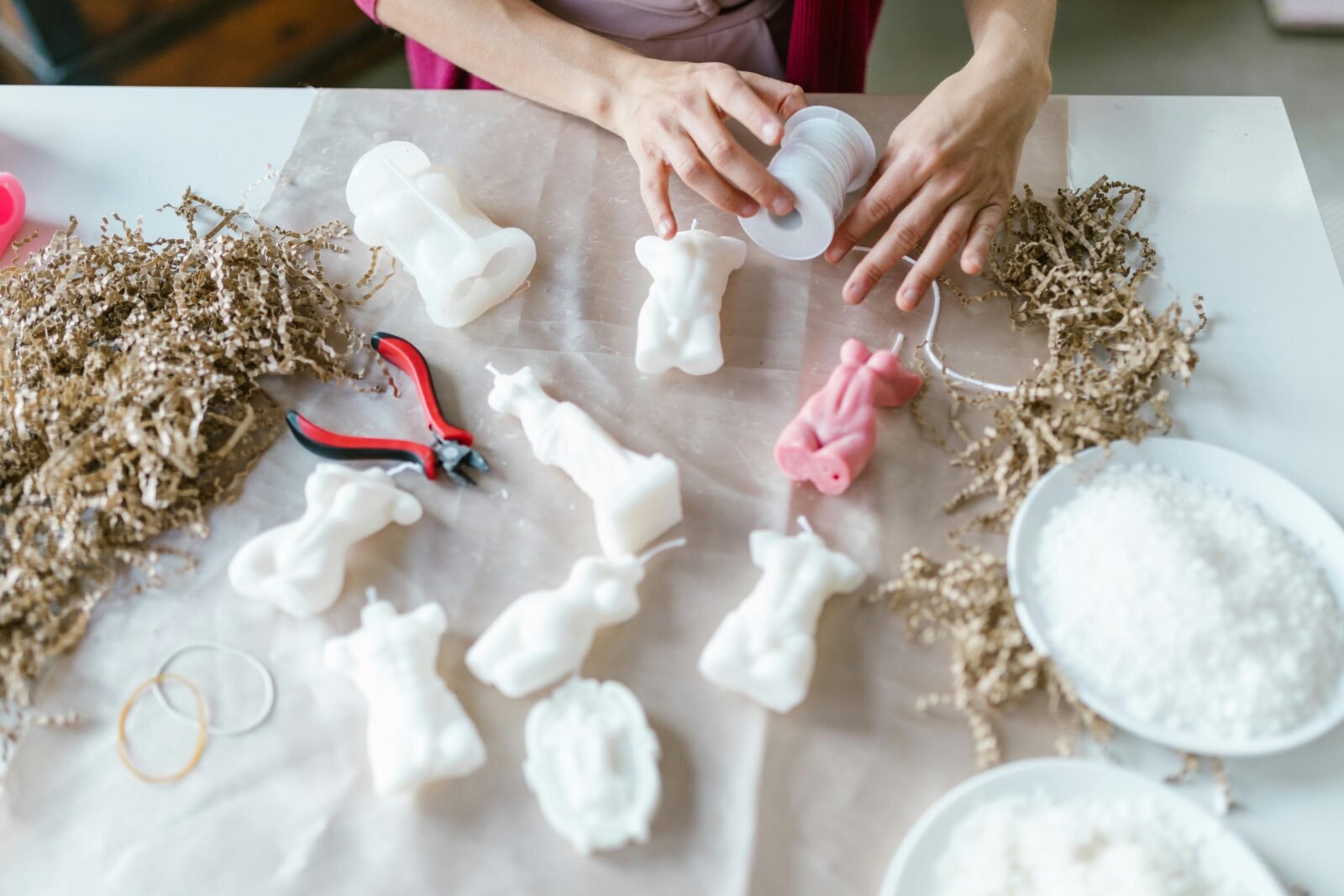
I’ll never forget the moment I realized my “relaxing hobby” could actually pay my electric bill. I was making candles at my kitchen table one Sunday afternoon when my neighbor stopped by, smelled the vanilla oak scent wafting from my apartment, and asked if she could buy three. Right there. Cash in hand.
That single interaction planted a seed: what if this didn’t have to stay a hobby?
If you’ve been searching for a side hustle that doesn’t require a business degree, a warehouse full of inventory, or a small fortune to get started, a candle business might be exactly what you need. The candle industry is projected to reach over $6 billion in the United States alone, and the beautiful truth is that you can carve out your piece of that market for less than the cost of a budget smartphone.
Starting a candle business for under $400 isn’t just possible it’s practical. But only if you approach it strategically, avoid the beginner mistakes that drain your budget, and focus on what actually matters in those crucial first months. This isn’t about getting rich quick. It’s about building something sustainable that fits your life and brings in real money without breaking the bank.
Why Candles Are the Perfect Low-Budget Business
Before we dive into the dollars and cents, let’s talk about why candles make financial sense as a startup.
Unlike many handmade businesses, candle-making has a remarkable profit margin. Your material costs typically run between $3 to $6 per candle, depending on size and quality, while finished candles easily sell for $15 to $30. That’s a 200-400% markup that covers your time, overhead, and actual profit.
The startup costs stay manageable because you don’t need specialized equipment. No industrial mixers, no kilns, no screen printing setup. A stove or hot plate, basic kitchen supplies you probably already own, and good-quality materials are enough to produce professional results.
You also don’t need months of training. Unlike soap-making with its complex lye calculations or pottery with its steep learning curve, you can master basic candle-making techniques in a weekend. Perfect your craft over time, absolutely, but you can start selling legitimate products within a few weeks of your first pour.
The Real $400 Breakdown (What to Actually Buy)

Here’s where most beginners sabotage themselves before they even start: they either buy too much of the wrong things or skimp on materials that actually matter. After watching dozens of friends launch candle businesses, I’ve seen both extremes crash and burn.
Your $400 needs to work strategically. Here’s the breakdown that gives you the best return:
Essential Supplies ($280-$320)
Wax ($80-$100): Start with 20-25 pounds of soy wax. This isn’t where you want to cut corners quality wax means better scent throw, cleaner burns, and fewer customer complaints. At roughly $4 per pound, this amount will produce 30-40 candles depending on your container sizes. Golden Brands 464 or Nature’s Garden Soy Wax are reliable options for beginners.
Fragrance Oils ($60-$80): Purchase 4-6 different scents in 16-ounce bottles. This gives you variety without overwhelming your startup budget or your decision-making. Focus on crowd-pleasers for your first batch: vanilla-based scents, clean linen types, seasonal favorites like cinnamon or pine, and one unique signature scent. Budget about $12-15 per bottle for quality fragrance oils that actually perform.
Wicks and Wick Accessories ($25-$35): Buy wick variety packs that include different sizes so you can test what works with your specific wax and container combination. Include wick stickers and centering devices. A poorly-wicked candle is a returned candle, so this $30 investment saves you headaches and refunds down the road.
Containers ($60-$80): This is your biggest visible expense and your strongest brand builder. Start with 30-40 containers. Straight-sided glass jars in 8-ounce sizes offer the best value and versatility. You can find quality containers for $1.50-$2.00 each through wholesale suppliers like Fillmore Container or bulk orders from Amazon.
Thermometer and Pouring Pot ($15-$20): A reliable thermometer is non-negotiable. Wax temperature affects everything from scent throw to surface finish. A dedicated pouring pot (even a large Pyrex pitcher works) keeps your process clean and controlled.
Labels ($30-$40): Invest in professional-looking labels from day one. Avery labels and a home printer work fine initially, but design matters. Canva offers free templates, or spend $20-30 on Etsy templates you can customize. This is your shelf appeal the difference between “homemade” and “handcrafted.”
Testing and Sampling Supplies ($40-$50)
Most beginners skip this category entirely, then wonder why their first batch doesn’t sell or performs poorly. Set aside money specifically for test burns and samples.
Buy smaller containers or tins for testing different wax-fragrance-wick combinations before committing to full production batches. A $40 investment in testing saves you hundreds in wasted materials and disappointed customers.
Business Basics ($60-$70)
Packaging materials: Tissue paper, thank-you cards, shipping boxes if you’re selling online. Simple but professional packaging costs about $0.50-$1.00 per order.
Business license and permits: Requirements vary dramatically by location. Some cities allow home-based businesses with just a general business license ($25-$50), while others require additional permits. Research your specific area before spending money here.
Basic liability insurance: This isn’t optional it’s essential. Candles involve fire, and you need protection. Basic product liability insurance for a small home-based business runs $200-$300 annually. Some platforms like Etsy require it before you can sell. Factor this into your first-year costs.
The First-Month Game Plan (Your Action Timeline)
Having $400 worth of supplies doesn’t mean anything if you don’t have a clear plan to turn those materials into actual income. Here’s the realistic timeline that works:
Week 1: Learn and Test
Don’t sell anything yet. Spend your first week making test batches, burning candles completely to check performance, and refining your technique. Make small batches of 4-6 candles at a time. Take detailed notes on what temperature you added fragrance, how different wicks performed, which scents had the best cold and hot throw.
This week feels slow, but it prevents the costly mistake of selling inferior products that damage your reputation before you even build one.
Week 2: Develop Your Core Line
Choose your best 3-4 scents based on test results and create your initial product line. Make your first real batch of 20-30 candles. While those cure (soy candles need 1-2 weeks for optimal scent throw), set up your selling platform.
Create an Etsy shop, set up Instagram and Facebook business pages, or plan your first local market. Take photos of your candles in natural light this costs nothing but makes everything look more professional.
Week 3: Soft Launch to Your Circle
Before going wide, sell to people who already know and trust you. Friends, family, coworkers, neighbors. Offer a “founding customer” discount (10-15% off) in exchange for honest feedback and photos.
This serves three purposes: you generate immediate cash flow to reinvest, you get real feedback from actual users, and you collect testimonials and photos for marketing. Aim to sell 15-20 candles this week at $15-18 each. That’s $225-$360 back into your business.
Week 4: Public Launch and Refinement
Open your doors to the broader market. List on Etsy, post on local Facebook selling groups, or sign up for a weekend farmers market or craft fair. Take everything you learned from week three and apply it.
By the end of month one, you should have sold 30-50 candles, recouped $450-$900 in revenue, and have a clear picture of what’s working and what needs adjustment.
What Most People Get Wrong (and How to Avoid It)

The candle business seems simple from the outside, which is exactly why so many people stumble in predictable ways.
Mistake #1: Buying Too Much Variety Too Soon
New candle makers want to offer fifteen scents right out of the gate. This fragments your budget, complicates inventory management, and overwhelms customers. Three to four exceptional scents that you’ve perfected will always outsell twelve mediocre options you haven’t fully tested.
Start narrow. Expand as revenue allows and customer requests guide you.
Mistake #2: Skipping the Cure Time
Soy wax needs time to fully bind with fragrance oils usually one to two weeks. Selling candles fresh off the production line means weak scent throw and disappointed customers. Plan your production calendar around this reality. Make candles two weeks before you need them, not two days.
Mistake #3: Underpricing Because You Feel Guilty
This one breaks my heart every time I see it. New business owners price their candles at $8 or $10 because “it only costs me $4 to make.” That math doesn’t account for your time, overhead, marketing, packaging, or the fact that you’re running a business, not a charity.
An 8-ounce soy candle with quality fragrance should sell for $15-$22 minimum, depending on your market and branding. Don’t compete on price compete on quality and story.
Mistake #4: Neglecting the Boring Business Stuff
Skipping insurance, ignoring local regulations, or failing to track expenses might save you hassle in month one, but it creates massive problems down the road. Set up a separate bank account. Track every expense. Get proper insurance. File for your business license. Handle the tedious stuff early when it’s still manageable.
Mistake #5: Treating Photos as an Afterthought
In an online-first market, your photos ARE your storefront. A beautifully crafted candle photographed in harsh overhead lighting on a cluttered table won’t sell. Natural light, simple backgrounds, and thoughtful styling cost nothing but make a dramatic difference in conversion rates.
Simple Swaps That Maximize Your Budget
Small decisions add up to major savings without sacrificing quality. Here’s where strategic thinking pays off:
Buy wax in bulk once you’re committed. Your first order might be 20 pounds at $4 per pound. Once you’ve sold through your initial batch, order 50 pounds and the per-pound cost drops to $2.80-$3.20. That’s $40-$70 in savings on your second round.
Make your own wick stickers. Those little adhesive dots cost $0.05-$0.10 each. A glue gun with low-temp glue sticks costs $5 and provides hundreds of applications. Small swap, real savings over time.
Skip fancy packaging initially. Kraft paper and twine create a charming rustic aesthetic for literally pennies per candle. As revenue grows, you can invest in custom boxes or branded ribbon. Start simple and professional.
Use free design tools ruthlessly. Canva, PicMonkey, and similar platforms offer everything you need for labels, social media graphics, and business cards. Don’t pay for Adobe subscriptions or custom design work until you’re actually profitable.
Source containers strategically. Restaurant supply stores, dollar stores, and thrift shops often have glass containers at a fraction of wholesale costs. Ensure they’re heat-safe and clean them thoroughly, but this can cut container costs by 50-60%.
Scaling Smart (Reinvesting Your First Profits)
Your first few sales are exciting, but what you do with that initial revenue determines whether this stays a hobby or becomes a real income stream.
Here’s the priority order for reinvestment:
First $200: Restock your core supplies. More wax, more fragrance in your best-selling scents, more containers. You need inventory to make sales.
Next $100: Expand your scent line by one or two options based on customer requests or market gaps you’ve identified. Add seasonal scents as holidays approach.
Next $150: Improve your marketing presence. This might mean paid promotion on Etsy, a booth at a larger craft fair, or Facebook ads to your local area. Test small amounts ($20-30) to see what works before committing larger budgets.
Next $200: Upgrade your weakest link. Maybe your labels need a professional redesign. Maybe you need better wicks. Maybe your packaging feels cheap. Identify the one element that’s holding back the perceived value of your product and fix it.
Next $250: Build your emergency inventory buffer. Having supplies on hand for 50-75 candles means you can fulfill unexpected bulk orders or craft fair opportunities without scrambling or turning down money.
Don’t pull profits out of the business for personal spending for at least the first three to six months. Let your money make more money. The compounding effect of consistent reinvestment is what turns a $400 startup into a $2,000-per-month side hustle within a year.
The Real Timeline to Profitability
Let’s get specific about what “success” actually looks like in real numbers and realistic timeframes.
Month 1: Break even or slight loss. You’ve invested $400, made back $300-$500 in sales. You’re learning systems and refining products.
Month 2-3: Consistent profit of $200-$400 per month. You’re reinvesting most of this, but the business is clearly viable and growing.
Month 4-6: Profit of $500-$800 per month as you’ve refined your best sellers, established reliable sales channels, and built a small but loyal customer base.
Month 7-12: Potential to reach $1,000-$1,500 monthly profit if you’re treating this seriously—regular production schedule, active marketing, expanding gradually.
This assumes part-time effort (10-15 hours per week). If you can dedicate more time or have natural advantages (large existing social network, experience in sales or marketing, location near high-traffic events), you might accelerate this timeline.
When to Know It’s Working (and When to Pivot)

Not every business attempt succeeds, and that’s okay. The key is recognizing the signals early so you don’t throw good money after bad.
Green lights that tell you to keep going:
- Repeat customers who buy multiple times without prompting
- Consistent sales week over week, even if they’re small
- Positive unsolicited feedback about scent quality and burn time
- Growing social media following or mailing list
- Requests for custom orders or bulk purchases
Red flags that suggest you need to adjust:
- Candles aren’t selling even at discounted prices
- Consistent complaints about burn quality, scent throw, or performance
- You dread making candles instead of enjoying the process
- No organic growth after three months of active effort
- Your profit margins are shrinking instead of growing
If you’re seeing red flags, don’t immediately quit pivot. Maybe your scents aren’t resonating and you need different fragrances. Maybe your market is saturated locally but online sales could work. Maybe your pricing is off. Adjust one variable at a time and measure results.
Beyond Candles: The Skills You’re Really Building
Here’s something nobody tells you about starting a small product business: the candle-making itself is actually the easiest part.
What you’re really learning is inventory management, customer service, basic accounting, photography, copywriting, social media marketing, pricing strategy, and supply chain logistics. These skills transfer to virtually any other product-based business you might try.
If candles don’t ultimately work out long-term, you’ll have a foundation that makes starting a soap business, a baked goods business, or a print-on-demand shop dramatically easier. You’re not just investing $400 in wax and wicks you’re investing in business education that usually costs thousands in courses or college classes.
The Honest Truth About Candle Business Life
Let me level with you about what this actually looks like day-to-day, because the Instagram version and the reality version are two different things.
Some weeks you’ll spend three hours pouring candles while watching Netflix, package everything up in twenty minutes, and make $400. It’ll feel like magic.
Other weeks you’ll have a batch fail because you poured at the wrong temperature, spend two hours responding to a customer complaint about shipping damage, and question why you ever thought this was a good idea.
Most weeks fall somewhere in between: steady, manageable work that produces steady, manageable income. It’s not passive. It’s not effortless. But it’s also not a corporate job, and you control almost every variable.
You’ll work evenings and weekends, at least initially. You’ll smell like vanilla sandalwood for days after big production runs. Your kitchen will occasionally look like a wax factory exploded. You’ll learn more about USPS shipping rates than any human should know.
But you’ll also experience the specific joy of creating something people love enough to spend their hard-earned money on. You’ll have customers message you that your candle helped them relax after a brutal day. You’ll see your products in someone’s home and feel proud.
It’s work, but it’s good work. And for under $400, it’s accessible work.
Your Week One Checklist
If you’re ready to actually do this not just think about it—here’s exactly what to do in the next seven days:
Day 1-2: Research your local business requirements. Call your city clerk’s office or visit their website. Find out what permits you need, what they cost, and how long they take to process. Get that application submitted.
Day 3: Create your supply list based on the budget breakdown above. Compare prices across at least three suppliers. Read reviews. Don’t just buy from the first website you find.
Day 4: Order your supplies. Start with 60-70% of your budget, leaving room for adjustments once materials arrive and you see what you’re actually working with.
Day 5-6: While waiting for supplies, set up your digital presence. Create social media accounts. Design basic labels. Research competitors in your area and online to see what pricing looks like.
Day 7: Make a production calendar. When will you make candles? When will they be ready to sell? When can you fulfill orders? Map out the next month in concrete detail.
Then, when those boxes arrive on your doorstep, you’re not starting from scratch. You’re executing a plan.
Related: 7 Home Businesses You Can Start With $500 or Less
The Bottom Line
Starting a candle business for under $400 won’t make you rich overnight. It won’t replace a full-time income in month one or probably even month six.
But it can absolutely generate an extra $500-$1,500 per month within your first year with part-time effort and smart decision-making. It can give you creative fulfillment, flexible scheduling, and the satisfaction of building something that’s entirely yours.
The difference between people who successfully start candle businesses on tight budgets and those who burn through money without results isn’t talent or luck it’s strategy. Buy the right things, avoid the common pitfalls, focus on quality over quantity, and give yourself permission to start small and grow steadily.
You don’t need a perfect plan. You don’t need a large inheritance. You don’t need any special connections.
You just need $400, a willingness to learn as you go, and the commitment to treat this like an actual business instead of an expensive hobby.
The market is there. The profit margins work. The startup costs are manageable.
The only question left is whether you’re ready to stop researching and start pouring.